METHANE – CH₄
Overview of the gas and its role in Earth’s atmosphere
Methane (CH₄) is a simple hydrocarbon found naturally in Earth’s atmosphere. It is colorless, odorless, and highly flammable under standard conditions.
It plays an important role in climate regulation due to its ability to absorb infrared radiation, contributing to the greenhouse effect. Although present in low concentrations, its impact on warming is significant.
Chemical structure and atmospheric behavior
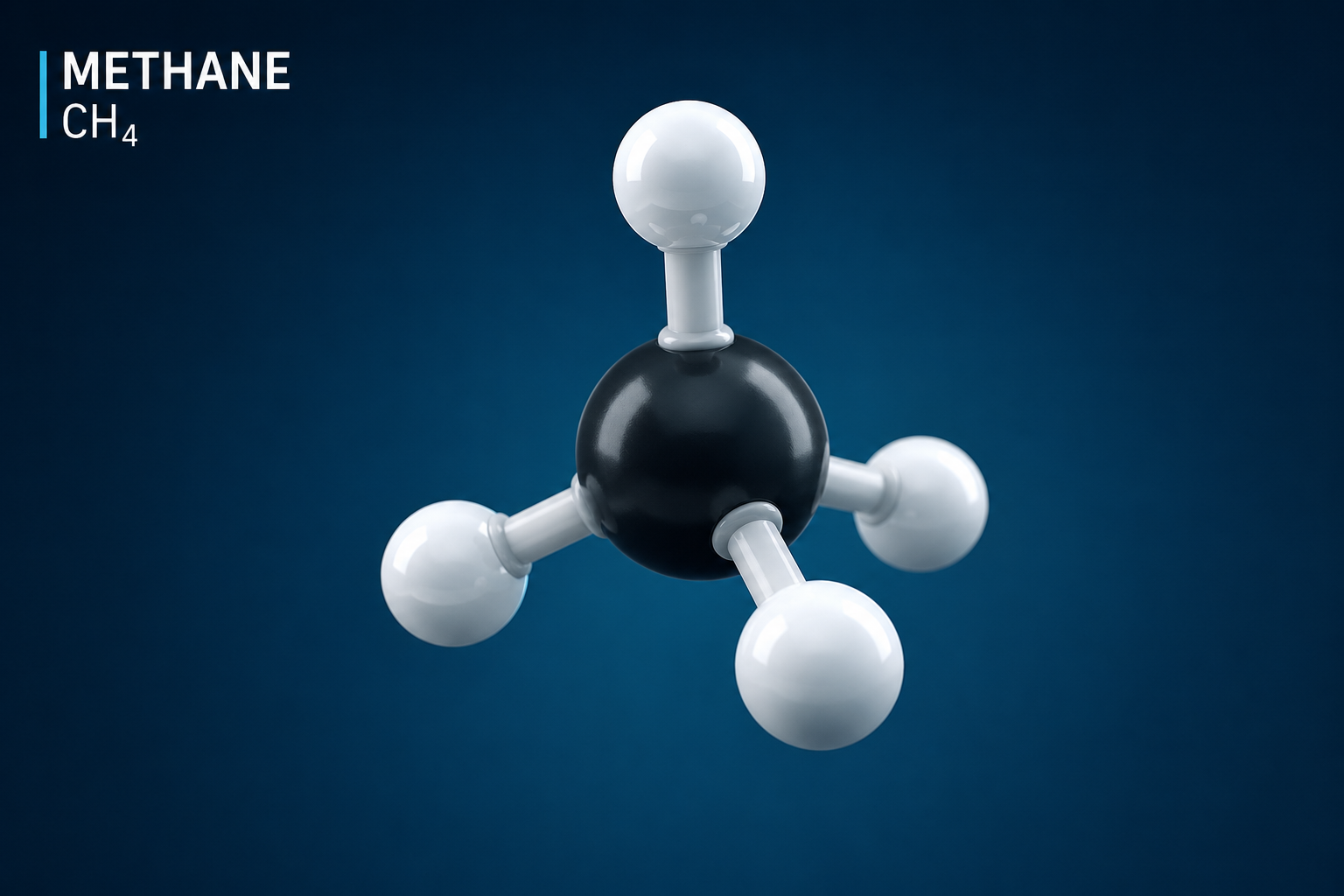
The molecule consists of one carbon atom and four hydrogen atoms arranged in a tetrahedral structure. This configuration makes it stable in the lower atmosphere but slowly reactive over time.
It is mainly removed through oxidation by hydroxyl radicals (OH), eventually forming carbon dioxide and water vapor.
Key properties:
- Atmospheric lifetime ~12 years
- Strong infrared absorption
- High radiative efficiency
- Variable regional distribution
Natural formation and global carbon cycle
Natural emissions occur in oxygen-poor environments where organic matter decomposes.
Main sources:
- Wetlands
- Ocean sediments
- Termites
- Geological seepage
- Permafrost regions
These processes are part of Earth’s long-term carbon cycling system.
Human-related emissions and industrial influence
Human activity is responsible for a large share of modern emissions.
Main sources include:
- Oil and gas production
- Livestock farming
- Rice agriculture
- Landfills
- Biomass burning
These activities have increased atmospheric levels significantly since the industrial era.
Climate impact and radiative forcing
This gas is one of the most powerful short-term greenhouse gases.
- ~80× CO₂ over 20 years
- ~30× CO₂ over 100 years
- Strong infrared absorption
- Significant contributor to near-term warming
Reducing emissions can quickly influence global temperature trends.
Atmospheric sinks and removal processes
Removal happens mainly through atmospheric chemistry.
Primary sink:
- Reaction with hydroxyl radicals (OH)
Secondary sinks:
- Soil microbial uptake
- Stratospheric oxidation
Energy use and industrial importance
This gas is widely used as an energy source and industrial feedstock.
Applications:
- Electricity generation
- Heating systems
- Hydrogen production
- Chemical industry feedstock
- LNG and CNG fuel
Monitoring and measurement systems
Atmospheric levels are tracked globally using advanced instruments.
Methods include:
- Satellite observations
- Ground monitoring stations
- Laser spectroscopy
- Infrared sensors
- Industrial leak detection
NOAA Global Monitoring Laboratory
Mitigation strategies and emission reduction
Reducing emissions is one of the fastest climate actions available.
Key strategies:
- Leak detection in energy systems
- Improved livestock management
- Landfill gas capture
- Rice farming optimization
- Reduced flaring and venting
Environmental feedback mechanisms
Climate warming can increase emissions through feedback loops:
- Wetland expansion
- Permafrost thaw
- Changes in atmospheric chemistry
- Altered microbial activity
Benefits and risks overview
| Benefits | Risks |
|---|---|
| Efficient energy source | Strong greenhouse gas |
| Industrial raw material | Climate warming impact |
| Global energy infrastructure | Leakage emissions |
| High energy density | Short-term radiative forcing |
Key summary (correct HTML layout, NO keyword stuffing)
Energy role
Essential global fuel used in electricity, heating, and industrial systems.
Climate impact
Powerful greenhouse gas with strong short-term warming effect.
Environmental challenge
Reducing emissions is critical for near-term climate stabilization.
Key summary (3-point RTL layout, corrected)
Major contributor to near-term global warming
Short-lived gas with continuous cycling in atmosphere
Widely used fuel in global energy systems
Final summary
Methane is a simple hydrocarbon with a major role in Earth’s climate system and global energy infrastructure. It is essential for modern energy production but also a significant contributor to near-term warming.
Industrial note
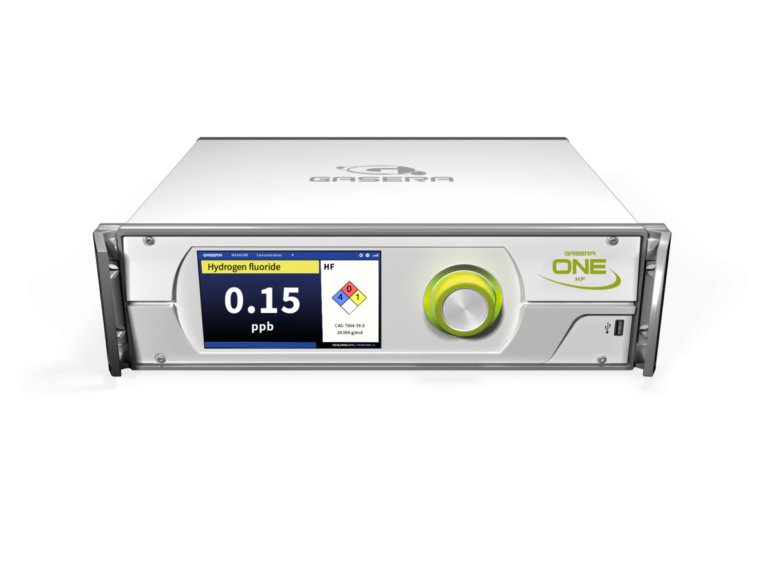
Advanced measurement technologies are used globally to monitor emissions. For example, modern analyzers such as LASER-PAS and NDIR-PAS systems are used in scientific and industrial monitoring applications.
Because of its tremendous impact on the climate change, CH4 is one of the most important gases whenever it comes to greenhouse gas research and reduction of emissions. GASERA offers analyzers for reliable measurement of methane, either with LASER-PAS (GASERA ONE GHG) or with NDIR-PAS (GASERA ONE PULSE).
Related products and applications:
GASERA ONE GHG
GASERA ONE PULSE
MULTIPOINT SAMPLER
GREENHOUSE GAS