Carbon Monoxide (CO): Properties, Sources, Health Effects and Environmental Impact
Introduction
Carbon Monoxide (CO) is a colorless, odorless and tasteless gas produced primarily through incomplete combustion of carbon-containing materials. Because it cannot be detected by human senses, carbon monoxide is considered one of the most dangerous indoor and industrial air pollutants.
CO is generated by fossil fuel combustion, biomass burning, vehicle exhaust, industrial processes, and residential heating systems. Although it does not significantly contribute to global warming directly, carbon monoxide plays an important role in atmospheric chemistry and air quality.
At elevated concentrations, exposure to carbon monoxide can be extremely dangerous because it interferes with oxygen transport in the bloodstream.
Chemical Structure and Properties of Carbon Monoxide
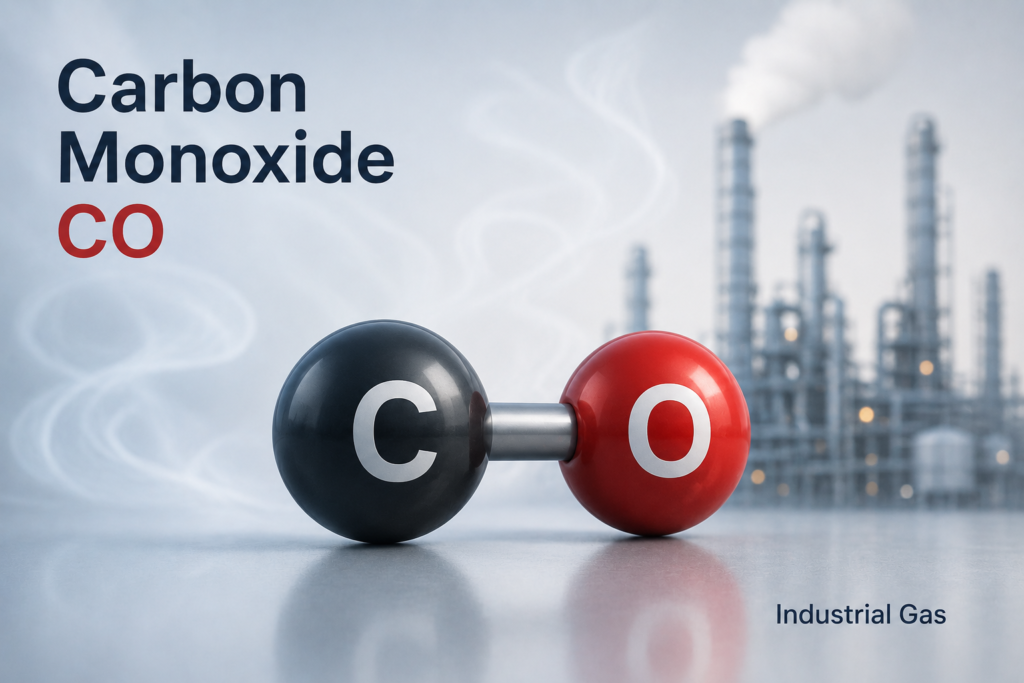
Carbon monoxide is a simple molecule consisting of one carbon atom bonded to one oxygen atom. Despite its simplicity, it is highly toxic because of its interaction with hemoglobin in blood.
Alt text Carbon Monoxide CO gas molecule industrial air pollution chemistry
Key properties:
Colorless gas
Odorless and tasteless
Produced during incomplete combustion
Slightly lighter than air
Highly toxic at elevated concentrations
Flammable under certain conditions
Because humans cannot detect it naturally, monitoring systems are critical in enclosed spaces.
Sources of Carbon Monoxide
Carbon monoxide is formed whenever carbon-containing materials burn without sufficient oxygen.
Main sources include:
Vehicle exhaust emissions
Industrial combustion systems
Residential heating equipment
Gas stoves and fireplaces
Forest and bush fires
Biomass burning
Tobacco smoke
Urban traffic and indoor combustion sources are among the most common exposure risks.
Industrial and Environmental Importance
Although carbon monoxide is toxic, it also plays a role in industrial chemistry and atmospheric reactions.
Industrial applications include:
Chemical synthesis processes
Metal production industries
Gas mixture calibration systems
Industrial combustion analysis
In the atmosphere, carbon monoxide participates in reactions that influence ozone formation and air chemistry.
Carbon Monoxide Sources and Risk Table
| Source | Description | Interesting Detail | Risk Level |
|---|---|---|---|
| Vehicle Exhaust | Produced by incomplete fuel combustion in engines | One of the largest urban CO sources globally | High in traffic areas |
| Residential Heating | Generated by faulty boilers and heaters | Common cause of indoor poisoning incidents | Very high indoors |
| Forest Fires | Released during biomass burning | Can travel long distances in atmosphere | Regional air pollution risk |
| Industrial Processes | Produced during metal and chemical production | Requires continuous monitoring systems | Occupational exposure risk |
| Tobacco Smoke | Contains measurable CO concentrations | Contributes to indoor exposure | Moderate long-term exposure |
Health Effects of Carbon Monoxide Exposure
Carbon monoxide is dangerous because it reduces the blood’s ability to transport oxygen.
Health effects include:
Headache and dizziness
Nausea and fatigue
Confusion and impaired concentration
Shortness of breath
Loss of consciousness at high exposure
Potential fatal poisoning in severe cases
Sensitive groups include children, elderly individuals, pregnant women, and people with cardiovascular disease.
Toxic Mechanism of Carbon Monoxide
Carbon monoxide binds strongly to hemoglobin in red blood cells, forming carboxyhemoglobin.
This process:
Reduces oxygen delivery to tissues
Interferes with cellular respiration
Causes oxygen deprivation in organs
Can damage brain and heart tissue
Even relatively low concentrations can become dangerous over time in enclosed spaces.
Environmental Impact and Atmospheric Chemistry
Carbon monoxide affects atmospheric chemistry even though it is not considered a major greenhouse gas.
Environmental impacts:
Influences ozone formation
Participates in photochemical smog reactions
Contributes to poor urban air quality
Oxidizes into carbon dioxide in atmosphere
Average atmospheric concentrations typically range between 90 and 150 ppb.
Indoor Air Quality and Monitoring
Because carbon monoxide is invisible and odorless, monitoring is essential in homes, workplaces, and industrial facilities.
Monitoring helps:
Detect leaks early
Prevent poisoning incidents
Improve indoor air safety
Ensure industrial compliance
CO detectors are considered essential safety devices in residential buildings.
👉 More information: https://www.gasera.com
Prevention and Safety Measures
Preventing exposure requires proper ventilation and regular inspection of combustion systems.
Safety measures:
Install carbon monoxide detectors
Maintain heating systems regularly
Ensure proper ventilation
Inspect industrial combustion equipment
Avoid indoor fuel combustion without ventilation
Carbon Monoxide Compared to Carbon Dioxide
Carbon monoxide and carbon dioxide are often confused but differ significantly.
Key differences:
CO is highly toxic
CO₂ is naturally present in respiration
CO forms through incomplete combustion
CO₂ forms through complete combustion
Carbon monoxide is dangerous at much lower concentrations than carbon dioxide.
Conclusion
Carbon Monoxide (CO) is a highly toxic gas produced mainly through incomplete combustion processes. Because it is invisible, odorless and tasteless, it represents a major safety risk in indoor environments and industrial settings.
Continuous monitoring, proper ventilation, and safe combustion practices are essential to reduce exposure and protect human health.