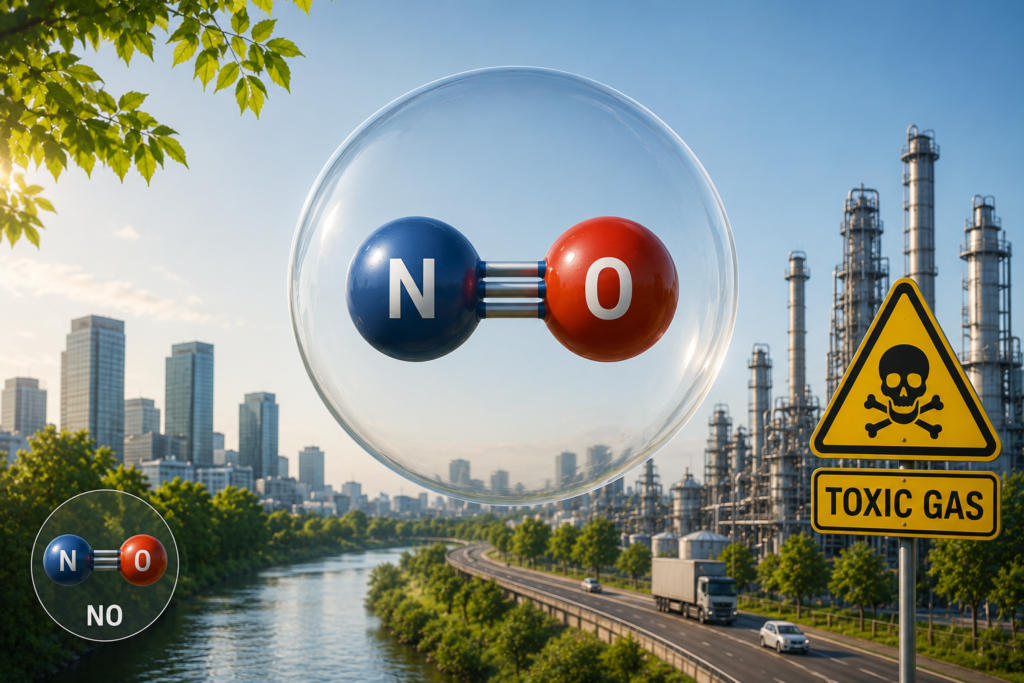
NITRIC OXIDE (NO) – Complete Guide, Health Risks, Industrial Uses, Exposure Effects & Environmental Impact
What is Nitric Oxide (NO)?
Nitric Oxide (NO), also known as nitrogen monoxide, is a colorless reactive gas that belongs to a family of compounds known as nitrogen oxides (NOx). The gas forms when nitrogen and oxygen react during high-temperature combustion processes.
NO gas is commonly encountered in industries such as chemical manufacturing, power generation, transportation, welding, oil refining, mining, pharmaceutical production, and scientific research laboratories.
Although nitrogen monoxide has important biological roles inside the human body at controlled concentrations, industrial exposure to elevated NO levels may become hazardous. Once released into the atmosphere, NO rapidly reacts with oxygen and forms Nitrogen Dioxide (NO₂), which is significantly more toxic and corrosive.
Exposure to nitrogen oxide gas may contribute to respiratory irritation, reduced oxygen transport, lung damage, and occupational health risks. In enclosed or poorly ventilated industrial environments, high concentrations may become immediately dangerous.
For official industrial safety and environmental information:
Key Facts About Nitric Oxide
| Property | Information |
|---|---|
| Chemical Formula | NO |
| Chemical Name | Nitric Oxide |
| Other Name | Nitrogen Monoxide |
| Appearance | Colorless gas |
| Odor | Slight sharp odor at higher concentrations |
| Classification | Reactive industrial gas |
| Main Hazard | Respiratory and oxygen transport effects |
| Reactivity | Rapidly converts into Nitrogen Dioxide (NO₂) |
| Common Exposure Areas | Combustion systems, welding, laboratories, engines |
Industrial Uses of Nitric Oxide
Nitrogen monoxide plays an important role in many industrial and scientific applications.
1. Chemical Manufacturing
NO gas is widely used in the production of nitric acid, fertilizers, explosives, and nitrogen-based industrial chemicals.
2. Pharmaceutical Industry
Controlled nitric oxide applications are used in specialized respiratory therapies and hospital treatment systems.
3. Metal Processing and Welding
High-temperature welding and cutting operations commonly generate nitrogen oxide emissions.
4. Power Generation Facilities
Combustion systems in power plants produce NO emissions during fuel-burning processes.
5. Transportation Industry
Vehicle engines, particularly diesel systems, are major sources of nitrogen oxide pollution in urban environments.
6. Oil and Gas Industry
Oil refineries and industrial combustion systems often release NO gas during processing operations.
7. Research and Laboratory Applications
Nitrogen monoxide is frequently used in chemical experiments, oxidation studies, and atmospheric research.
Health Effects of Nitric Oxide Exposure
Exposure to NO gas may affect the respiratory system and oxygen transport mechanisms inside the body.
Even low to moderate concentrations may irritate the lungs and respiratory tract. Higher concentrations may contribute to severe breathing difficulties and reduced oxygen delivery to tissues.
One of the major hazards associated with nitrogen monoxide exposure is its rapid conversion into Nitrogen Dioxide (NO₂), which significantly increases toxic exposure risks.
Short-Term Exposure Symptoms
Exposure to nitrogen oxide gas may cause:
- Eye irritation
- Nose and throat irritation
- Persistent coughing
- Chest tightness
- Difficulty breathing
- Wheezing
- Headaches
- Dizziness
- Fatigue
- Nausea
- Reduced lung function
Higher concentrations may result in:
- Lung inflammation
- Pulmonary edema
- Oxygen deficiency
- Respiratory distress
- Chemical pneumonitis
- Loss of consciousness
- Fatal exposure in severe situations
nitrogen oxide Long-Term Effects of NO Exposure
Repeated or prolonged exposure to nitrogen monoxide may contribute to chronic health conditions.
Long-Term Risks Include
| Health Risk | Potential Effects |
|---|---|
| Respiratory Damage | Chronic breathing difficulties |
| Asthma Aggravation | Increased airway sensitivity |
| Lung Function Reduction | Reduced respiratory capacity |
| Occupational Lung Disease | Long-term respiratory complications |
| Cardiovascular Stress | Oxygen transport disruption |
Workers with existing respiratory conditions may be especially vulnerable to long-term NO exposure.
Why Nitric Oxide Can Become Dangerous
Nitric Oxide becomes especially hazardous in confined spaces or poorly ventilated industrial areas.
Once inhaled, the gas may interfere with oxygen transport and damage sensitive lung tissues. In addition, NO rapidly reacts with oxygen and forms Nitrogen Dioxide, increasing overall toxicity levels.
Another challenge is delayed respiratory symptoms. Workers exposed to elevated concentrations may initially experience only mild discomfort before severe breathing complications develop hours later.
Nitric Oxide Exposure Limits
Occupational exposure limits are designed to protect workers from harmful nitrogen oxide concentrations.
Typical Exposure Guidelines
| Exposure Level | Potential Effects |
|---|---|
| Low-Level Exposure | Mild respiratory irritation |
| Moderate Exposure | Breathing discomfort and coughing |
| High Concentrations | Severe respiratory distress |
| Enclosed Space Exposure | Potentially life-threatening conditions |
Continuous industrial air monitoring is essential in workplaces where combustion or nitrogen oxide generation occurs.
Industries with High Nitric Oxide Exposure Risks
Several industries face elevated NO gas exposure risks.
High-Risk Industries Include
- Chemical manufacturing plants
- Oil and gas facilities
- Power generation stations
- Welding and metal workshops
- Mining operations
- Tunnel construction projects
- Transportation maintenance facilities
- Pharmaceutical production environments
- Research laboratories
- Steel processing industries
Environmental Impact of Nitric Oxide
Nitrogen oxide emissions are major contributors to environmental pollution and atmospheric reactions.
1. Air Pollution
NO emissions contribute heavily to urban smog and poor air quality.
2. Ground-Level Ozone Formation
Nitrogen oxide compounds participate in atmospheric reactions that create harmful ground-level ozone.
3. Acid Rain
NO gas contributes to acid rain formation after converting into nitrogen dioxide and nitric acid compounds.
4. Ecosystem Damage
Long-term nitrogen oxide pollution may damage forests, lakes, agricultural crops, and soil quality.
5. Atmospheric and Climate Effects
Nitrogen oxide compounds influence atmospheric chemistry and environmental systems.
Symptoms of Nitric Oxide Exposure
Recognizing symptoms early is critical for preventing severe injury.
Common Symptoms Include
- Burning sensation in the throat
- Severe coughing
- Shortness of breath
- Chest pain
- Bluish lips or skin
- Rapid breathing
- Confusion
- Weakness
- Dizziness
- Fluid buildup in lungs
- Loss of consciousness
Emergency medical treatment is required after significant exposure.
First Aid Measures for Nitric Oxide Exposure
Inhalation Exposure
If a person inhales NO gas:
- Move the victim immediately to fresh air.
- Keep the individual calm and warm.
- Administer oxygen if trained personnel are available.
- Seek emergency medical attention immediately.
- Monitor breathing continuously.
Eye Exposure
- Rinse eyes carefully with clean water for at least 15 minutes.
- Remove contact lenses if present.
- Obtain urgent medical attention.
Skin Exposure
- Remove contaminated clothing.
- Wash affected areas thoroughly.
- Seek medical evaluation if irritation occurs.
Nitric Oxide Monitoring and Prevention Systems
Real-time monitoring systems are essential for reducing NO exposure risks in industrial environments.
Recommended Prevention Measures
- Install continuous nitrogen oxide monitoring systems
- Improve industrial ventilation systems
- Use respiratory protective equipment
- Conduct regular air quality testing
- Train employees on gas hazards
- Maintain emergency response procedures
- Perform industrial equipment maintenance regularly
Benefits of NO Monitoring Systems
| Monitoring Function | Safety Benefit |
|---|---|
| Leak detection | Early hazard identification |
| Alarm systems | Faster emergency response |
| Workplace air monitoring | Improved worker safety |
| Environmental compliance | Regulatory protection |
| Process monitoring | Reduced industrial risks |
Modern industrial gas detectors can continuously monitor NO concentrations and trigger automatic alarms when hazardous levels are detected.
Indoor Sources of Nitric Oxide Gas
Indoor combustion systems may also produce elevated nitrogen oxide levels.
Common Indoor Sources Include
- Gas stoves
- Heaters
- Boilers
- Fireplaces
- Vehicle exhaust in garages
- Poorly ventilated combustion systems
Indoor nitrogen oxide exposure may aggravate asthma and respiratory conditions, especially in children and elderly individuals.
Emergency Response to Nitrogen Oxide Leaks
NO gas leaks require rapid emergency response procedures because of respiratory hazards and oxidation risks.
Emergency Response Steps
- Evacuate affected areas immediately.
- Isolate the leak source if safe.
- Use self-contained breathing apparatus (SCBA).
- Ventilate contaminated spaces.
- Notify emergency response personnel.
- Monitor atmospheric conditions continuously before re-entry.
Frequently Asked Questions About Nitric Oxide
Is Nitric Oxide dangerous?
Yes. Industrial concentrations of NO gas may become highly hazardous and contribute to severe respiratory injury.
What does NO gas smell like?
Nitrogen monoxide is generally colorless and may have a slight sharp odor at higher concentrations.
Can nitrogen oxide exposure be fatal?
High concentrations in enclosed or poorly ventilated spaces may cause life-threatening respiratory complications.
What industries commonly encounter NO gas?
Industries including chemical manufacturing, transportation, welding, power generation, and oil refining commonly encounter nitrogen oxide emissions.
How can workers reduce exposure risks?
Workers should use gas detectors, ventilation systems, respiratory protection, and follow industrial safety procedures.
Conclusion
Nitric Oxide (NO) is a highly reactive industrial gas that presents significant health and environmental risks when improperly controlled.
From combustion systems and transportation to chemical manufacturing and welding operations, NO exposure hazards are widespread in modern industrial environments.
Continuous gas monitoring, industrial ventilation systems, worker training, emergency preparedness, and occupational exposure controls are essential for minimizing risks and protecting human health.
Understanding the industrial uses, environmental impact, exposure effects, and prevention methods associated with nitrogen monoxide can help industries maintain safer workplaces and reduce harmful atmospheric pollution.
Related products and applications:
GASERA ONE FORMALDEHYDE
GASERA ONE PULSE
MULTIPOINT SAMPLER
10 FACTS ABOUT FORMALDEHYDE (HCHO)