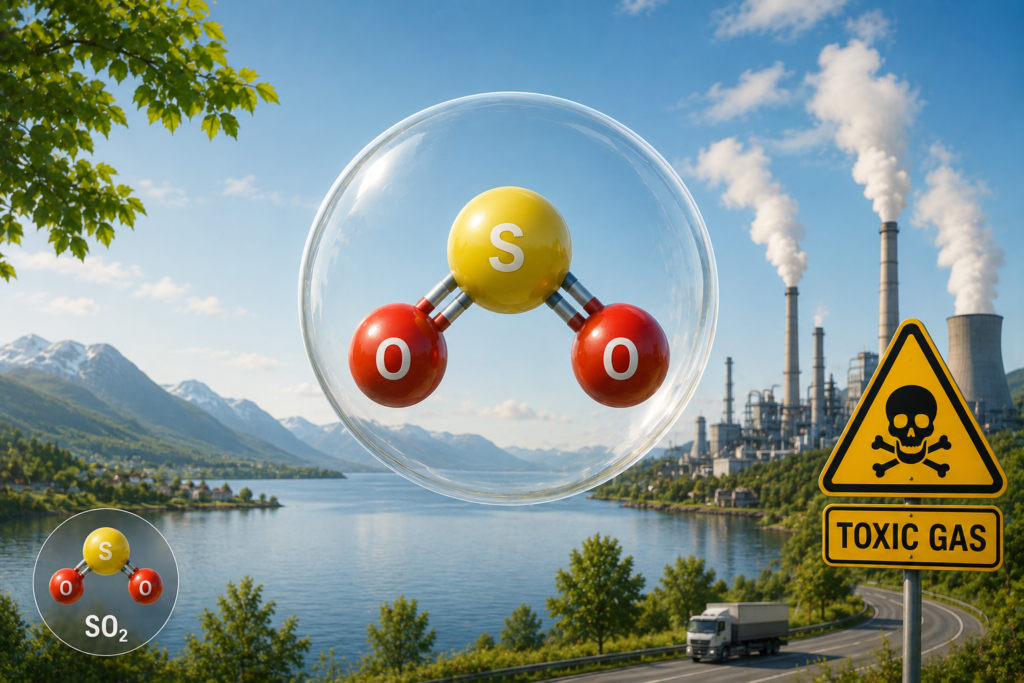
SULFUR DIOXIDE (SO₂) – Complete Guide, Health Risks, Industrial Uses, Exposure Effects & Environmental Impact
What is Sulfur Dioxide (SO₂)?
Sulfur Dioxide (SO₂) is a toxic, colorless gas with a strong, sharp, suffocating odor. It belongs to a group of sulfur oxide gases commonly generated during the combustion of sulfur-containing fuels such as coal, crude oil, and industrial fuel products.
Sulfur Dioxide is widely encountered in industries including chemical manufacturing, oil refining, mining, metal smelting, power generation, paper production, and food processing facilities.
Because of its highly irritating and corrosive properties, SO₂ exposure may create serious respiratory and environmental hazards even at relatively low concentrations. When released into the atmosphere, it reacts with moisture and oxygen to form sulfuric acid, contributing significantly to acid rain and industrial air pollution.
Exposure to sulfur oxide gases may lead to respiratory irritation, breathing difficulties, lung injury, and long-term pulmonary complications. High concentrations in enclosed or poorly ventilated environments may become immediately dangerous.
For official industrial safety and environmental information:
Key Facts About Sulfur Dioxide
| Property | Information |
|---|---|
| Chemical Formula | SO₂ |
| Chemical Name | Sulfur Dioxide |
| Appearance | Colorless gas |
| Odor | Sharp, suffocating smell |
| Classification | Toxic and corrosive gas |
| Main Hazard | Severe respiratory irritation |
| Reactivity | Forms sulfuric acid with moisture |
| Common Exposure Areas | Power plants, refineries, smelters, combustion systems |
Industrial Uses of Sulfur Dioxide
Sulfur Dioxide plays an important role in multiple industrial and manufacturing processes despite its hazardous nature.
1. Chemical Manufacturing
SO₂ is widely used in the production of sulfuric acid, fertilizers, industrial chemicals, and processing agents.
2. Oil Refining Industry
Oil refineries generate sulfur oxide emissions during petroleum processing and fuel combustion operations.
3. Metal Smelting and Mining
Ore extraction and smelting facilities commonly release large amounts of this gas during metal processing.
4. Power Generation
Coal-fired power plants remain one of the largest industrial sources of SO₂ emissions worldwide.
5. Food and Beverage Industry
Sulfur Dioxide is sometimes used as a preservative in dried fruits, wine production, and food processing systems.
6. Paper and Pulp Industry
SO₂ is involved in sulfite pulping processes used in paper manufacturing operations.
Health Effects of Sulfur Dioxide Exposure
Sulfur Dioxide is extremely harmful to the respiratory system and may affect breathing even at relatively low concentrations.
People with asthma, allergies, or existing lung diseases are particularly sensitive to sulfur oxide exposure.
Short-Term Exposure Symptoms
Exposure to SO₂ may cause:
- Burning sensation in the throat
- Eye irritation
- Persistent coughing
- Chest tightness
- Difficulty breathing
- Wheezing
- Headaches
- Dizziness
- Nausea
Higher concentrations may result in:
- Severe lung irritation
- Pulmonary edema
- Respiratory distress
- Oxygen deficiency
- Chemical burns to airways
- Loss of consciousness
- Fatal respiratory complications
Long-Term Health Effects of Sulfur Dioxide
Repeated or prolonged exposure to sulfur oxide gases may contribute to serious chronic health conditions.
Long-Term Risks Include
| Health Risk | Potential Effects |
|---|---|
| Chronic Bronchitis | Persistent respiratory symptoms |
| Asthma Aggravation | Increased airway sensitivity |
| Lung Function Reduction | Reduced respiratory capacity |
| Occupational Lung Disease | Long-term pulmonary complications |
| Respiratory Damage | Chronic breathing difficulties |
Children, elderly individuals, and industrial workers may face elevated risks from long-term SO₂ exposure.
Why Sulfur Dioxide Can Become Dangerous
Sulfur Dioxide becomes especially hazardous in confined or poorly ventilated industrial environments.
When inhaled, SO₂ reacts rapidly with moisture inside the respiratory tract and forms acidic compounds capable of damaging sensitive tissues. Because the gas is highly irritating, exposure symptoms may appear within seconds at elevated concentrations.
Sulfur oxide emissions also contribute significantly to environmental pollution, acid rain formation, and atmospheric degradation.
Sulfur Dioxide Exposure Risks in Industry
Several industrial sectors face elevated SO₂ exposure risks due to fuel combustion, metal processing, and chemical production activities.
High-Risk Industries Include
- Chemical manufacturing plants
- Oil refineries
- Mining operations
- Metal smelting facilities
- Coal-fired power stations
- Paper and pulp mills
- Food processing facilities
- Industrial combustion systems
Continuous industrial air monitoring is essential in these environments.
Environmental Impact of Sulfur Dioxide
Sulfur Dioxide is one of the most significant industrial air pollutants affecting ecosystems and atmospheric conditions worldwide.
1. Acid Rain
SO₂ reacts with atmospheric moisture and oxygen to form sulfuric acid, contributing directly to acid rain.
2. Air Pollution
Sulfur oxide emissions contribute heavily to industrial smog and poor urban air quality.
3. Ecosystem Damage
Acid rain may damage forests, lakes, rivers, agricultural crops, and soil quality.
4. Structural Corrosion
Sulfur compounds accelerate the corrosion of buildings, industrial equipment, and infrastructure.
5. Reduced Atmospheric Visibility
SO₂ contributes to haze formation and reduced visibility in polluted industrial areas.
Symptoms of Sulfur Dioxide Exposure
Recognizing symptoms early is critical for preventing severe respiratory injury.
Common Symptoms Include
- Severe coughing
- Chest pain
- Breathing difficulties
- Burning throat sensation
- Eye irritation
- Wheezing
- Bluish lips or skin
- Dizziness
- Weakness
- Fluid buildup in lungs
Emergency medical treatment is necessary after serious exposure incidents.
First Aid Measures for Sulfur Dioxide Exposure
Inhalation Exposure
If a person inhales Sulfur Dioxide:
- Move the victim immediately to fresh air.
- Keep the person calm and warm.
- Administer oxygen if trained personnel are available.
- Seek emergency medical assistance immediately.
- Monitor breathing continuously.
Eye Exposure
- Rinse eyes carefully with clean water for at least 15 minutes.
- Remove contact lenses if present.
- Obtain urgent medical attention.
Skin Exposure
- Remove contaminated clothing.
- Wash affected areas thoroughly with water.
- Seek medical evaluation if irritation continues.
Sulfur Dioxide Monitoring and Prevention Systems
Continuous gas monitoring is critical for workplace safety and environmental protection.
Recommended Prevention Measures
- Install continuous SO₂ monitoring systems
- Improve industrial ventilation systems
- Use respiratory protective equipment
- Conduct regular air quality testing
- Train employees regarding gas hazards
- Maintain emergency response procedures
- Perform industrial equipment inspections regularly
Benefits of SO₂ Monitoring Systems
| Monitoring Function | Safety Benefit |
|---|---|
| Leak detection | Early hazard identification |
| Alarm systems | Faster emergency response |
| Workplace air monitoring | Improved worker safety |
| Environmental compliance | Regulatory protection |
| Process monitoring | Reduced industrial risks |
Modern industrial gas detectors can continuously monitor gas concentrations and automatically activate alarm systems when dangerous levels are detected.
Indoor Sources of Sulfur Dioxide
Indoor sulfur oxide exposure may occur in industrial facilities and poorly ventilated combustion environments.
Common Indoor Sources Include
- Industrial boilers
- Coal combustion systems
- Oil-burning heaters
- Industrial furnaces
- Poorly ventilated fuel-burning equipment
Indoor exposure may aggravate asthma, allergies, and respiratory diseases.
Emergency Response to Sulfur Dioxide Leaks
SO₂ leaks require immediate emergency response procedures due to severe respiratory hazards.
Emergency Response Steps
- Evacuate affected areas immediately.
- Isolate the leak source if safe.
- Use self-contained breathing apparatus (SCBA).
- Ventilate contaminated spaces.
- Notify emergency response personnel.
- Monitor atmospheric conditions continuously before re-entry.
Frequently Asked Questions About Sulfur Dioxide
Is Sulfur Dioxide dangerous?
Yes. Sulfur Dioxide is highly toxic and may seriously damage the respiratory system.
What does Sulfur Dioxide smell like?
SO₂ has a strong, sharp, suffocating odor noticeable even at relatively low concentrations.
Can Sulfur Dioxide exposure become fatal?
High concentrations in enclosed spaces may cause severe respiratory failure and life-threatening complications.
What industries commonly encounter SO₂?
Industries including power generation, oil refining, mining, metal smelting, and chemical manufacturing commonly encounter sulfur oxide emissions.
How can workers reduce exposure risks?
Workers should use gas detection systems, ventilation equipment, respiratory protection, and follow industrial safety procedures.
Conclusion
Sulfur Dioxide (SO₂) is one of the most hazardous industrial air pollutants encountered in modern industrial and combustion environments.
From power plants and oil refineries to mining operations and metal smelters, sulfur oxide exposure risks are widespread across industrial sectors worldwide.
Continuous gas monitoring, ventilation systems, worker training, emergency preparedness, and regulatory compliance are essential for minimizing respiratory hazards and protecting both human health and the environment.
Understanding the industrial applications, environmental impact, exposure effects, and prevention methods associated with this gas can help industries maintain safer workplaces and reduce harmful atmospheric pollution.
Related products and applications:
GASERA ONE FORMALDEHYDE
GASERA ONE PULSE
MULTIPOINT SAMPLER
10 FACTS ABOUT FORMALDEHYDE (HCHO)